National Film Awards are India’s highest government-sponsored honors for excellence in cinema. The Ministry of Information and Broadcasting presents these awards every year since 1954 to recognize outstanding films across feature, non-feature, and writing on cinema categories.
This page covers the complete guide to National Film Awards. It explains the history, award sections, jury selection process, trophy types, ceremony details, and why these awards hold the highest prestige in Indian cinema.
Table of Contents
- What Are National Film Awards?
- How Did National Film Awards Start in India?
- What Are the 3 Sections of National Film Awards?
- What Is the Difference Between Swarna Kamal and Rajat Kamal?
- How Does the National Film Awards Jury Select Winners?
- Who Presents National Film Awards and Where?
- Why Are National Film Awards Important for Indian Cinema?
- How Are National Film Awards Different from Filmfare and IIFA Awards?
- Frequently Asked Questions About National Film Awards
What Are National Film Awards?
National Film Awards are the most prestigious cinema honors given by the Government of India to recognize films of artistic, technical, and social excellence across all Indian languages and formats every year.
The Government of India established the National Film Awards in 1954. The awards cover films produced in every Indian language. Hindi, Tamil, Telugu, Malayalam, Kannada, Bengali, Marathi, and all other recognized languages receive equal consideration.
The National Film Development Corporation (NFDC) administers these awards under the Ministry of Information and Broadcasting. Before 2021, the Directorate of Film Festivals (DFF) handled the administration. The Ministry transferred this responsibility to NFDC to streamline operations and bring the awards under a single national body.
The awards serve 3 core purposes:
- Encourage production of films with aesthetic and technical excellence
- Promote regional cinema and films in all Indian languages
- Foster national integration through the medium of cinema
The 71st National Film Awards ceremony honored films certified in the calendar year 2023. The ceremony recognized 31 feature films, 24 non-feature films, and multiple books and critics under the writing on cinema section.
National Film Awards differ from private ceremonies like the Filmfare Awards or IIFA Awards. The government appoints an independent jury of cinema experts. No public voting or commercial sponsorship influences the selection. This structure makes the National Film Awards the most credible film honor in India.
How Did National Film Awards Start in India?
The Government of India started the National Film Awards in 1954 to promote quality cinema and recognize filmmakers who contributed to the growth of Indian film culture through artistic and socially relevant storytelling.
The first ceremony took place in 1954. The government awarded prizes for the best films produced in the year 1953. The initial structure covered fewer categories than the current format. Feature films in different Indian languages received recognition alongside the best overall film.
India had gained independence in 1947. The government recognized cinema as a powerful medium for education, cultural preservation, and national integration. The Central Government created a framework to honor films that served these goals.
The awards grew in scope over the following decades. New categories emerged for acting, direction, cinematography, music, and technical achievements. The government expanded coverage to include documentaries, short films, and writing on cinema.
Key Milestones in National Film Awards History
The National Film Awards evolved through several landmark moments over 7 decades:
- 1954: First National Film Awards ceremony held. Best Feature Film award given for the first time.
- 1968: Separate categories introduced for Best Actor and Best Actress.
- 1969: Dadasaheb Phalke Award introduced as India’s highest cinema honor for lifetime contribution. The award was named after Dadasaheb Phalke, the father of Indian cinema who made Raja Harishchandra in 1913.
- 1973: The Directorate of Film Festivals (DFF) took over administration of the awards from the Ministry directly.
- 1975: Regional language film awards expanded to cover more Indian languages.
- 1992: Indira Gandhi Award for Best Debut Film of a Director introduced.
- 2021: The National Film Development Corporation (NFDC) replaced DFF as the administering body.
- 2025: The 71st National Film Awards ceremony honored films from 2023 with expanded categories.
The awards have maintained their core identity throughout these changes. Government backing, expert jury selection, and recognition of films in all Indian languages remain the foundation of the National Film Awards.
What Are the 3 Sections of National Film Awards?
National Film Awards cover 3 distinct sections: Feature Films, Non-Feature Films, and Best Writing on Cinema. Each section has its own jury panel, categories, and evaluation criteria.
Feature Film Awards
The Feature Film section recognizes excellence in narrative cinema across all Indian languages. This section carries the highest public attention and covers the widest range of categories.
Feature Film categories include:
| Category | Trophy |
|---|---|
| Best Feature Film | Swarna Kamal (Golden Lotus) |
| Best Direction | Swarna Kamal (Golden Lotus) |
| Best Actor | Rajat Kamal (Silver Lotus) |
| Best Actress | Rajat Kamal (Silver Lotus) |
| Best Supporting Actor | Rajat Kamal (Silver Lotus) |
| Best Supporting Actress | Rajat Kamal (Silver Lotus) |
| Best Children’s Film | Swarna Kamal (Golden Lotus) |
| Best Film on Social Issues | Rajat Kamal (Silver Lotus) |
| Best Popular Film Providing Wholesome Entertainment | Rajat Kamal (Silver Lotus) |
| Best Cinematography | Rajat Kamal (Silver Lotus) |
| Best Music Direction | Rajat Kamal (Silver Lotus) |
| Best Playback Singer (Male and Female) | Rajat Kamal (Silver Lotus) |
| Best Screenplay (Original and Adapted) | Rajat Kamal (Silver Lotus) |
| Best Editing | Rajat Kamal (Silver Lotus) |
| Best Regional Film (per language) | Rajat Kamal (Silver Lotus) |
The regional language awards recognize the best film in each major Indian language. This makes the National Film Awards the only ceremony in India that treats every language cinema equally.
You can explore the complete list of National Film Award categories for a detailed breakdown of every category with past winners and eligibility rules.
Non-Feature Film Awards
The Non-Feature Film section covers documentaries, short films, and animation. This section receives less public attention but recognizes critical work in Indian cinema beyond commercial feature films.
Non-feature categories include Best Documentary, Best Short Fiction Film, Best Animation Film, Best Exploration and Adventure Film, and Best Film on Environment and Conservation.
Filmmakers working in documentary and short film formats compete for recognition in this section. The jury evaluates artistic quality, social relevance, and technical execution.
Read the full guide on National Film Awards for documentaries and short films to see winners and eligibility criteria for non-feature categories.
Best Writing on Cinema Awards
The Writing on Cinema section honors books, articles, and film criticism that contribute to the study and appreciation of cinema as an art form.
This section receives the least public attention among the 3 sections. It recognizes authors and critics who write about Indian cinema in any Indian language or English.
Categories cover Best Book on Cinema, Best Film Criticism, and Best Film Review. The jury evaluates depth of analysis, originality of perspective, and contribution to cinema scholarship.
No other major film award ceremony in India recognizes writing on cinema. This makes the National Film Awards unique in covering the complete ecosystem of Indian cinema.
See the full archive of National Film Awards for writing on cinema with all past winners.
What Is the Difference Between Swarna Kamal and Rajat Kamal?
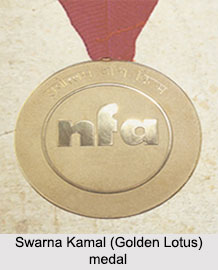
Swarna Kamal (Golden Lotus) and Rajat Kamal (Silver Lotus) are the two types of trophies given at National Film Awards, where Swarna Kamal represents the highest tier of recognition and Rajat Kamal covers specific craft and regional categories.
The difference between the two trophies is based on the category’s prestige level:
| Aspect | Swarna Kamal (Golden Lotus) | Rajat Kamal (Silver Lotus) |
|---|---|---|
| Meaning | Golden Lotus | Silver Lotus |
| Prestige Level | Highest tier | Second tier |
| Given For | Best Feature Film, Best Direction, Best Children’s Film, Dadasaheb Phalke Award | Best Actor, Best Actress, Cinematography, Music, Regional Films, Technical Awards |
| Prize Money | Higher cash award | Lower cash award |
| Design | Gold-plated lotus medal | Silver-plated lotus medal |
Both trophies hold immense value in the Indian film industry. Winning either a Swarna Kamal or Rajat Kamal remains a career-defining achievement for any filmmaker, actor, or technician.
The President of India presents both trophies at the ceremony. Winners receive a certificate, a medal (Swarna Kamal or Rajat Kamal), and a cash prize along with the trophy.
Learn more about the Swarna Kamal and Rajat Kamal trophy details, history, and prize money.
How Does the National Film Awards Jury Select Winners?
The National Film Awards jury uses a two-tier system of Regional Juries and a Central Jury to evaluate every eligible film independently without influence from the government, producers, or commercial interests.
The jury selection process follows a structured and transparent method. The government does not interfere in the selection of winners. The jury operates independently from start to finish.
Who Appoints National Film Awards Jury Members?
The Ministry of Information and Broadcasting appoints all jury members from among experts in cinema, allied arts, and humanities. The Ministry selects individuals based on their expertise and contribution to Indian cinema.
Jury members include film directors, actors, cinematographers, film critics, writers, and academics. The Ministry ensures representation from different regions and language industries of India.
Each section (Feature Films, Non-Feature Films, Writing on Cinema) has its own separate jury panel. The panels work independently. A jury member for Feature Films does not evaluate Non-Feature Films.
What Is the Two-Tier Jury System?
The two-tier system operates in 2 stages for Feature Films:
Stage 1: Regional Juries Regional Juries evaluate films from their respective language industries. Each regional panel watches every film submitted in their designated language. The panel discusses and recommends films for consideration by the Central Jury.
Stage 2: Central Jury The Central Jury is the apex decision-making body. This panel reviews all films recommended by Regional Juries. The Central Jury watches each recommended film in its entirety before making final decisions. No jury member votes without watching the complete film.
The rules require mandatory viewing of each film. A jury member cannot vote on a film they have not watched fully. This rule maintains the integrity of the selection process.
Films must hold a certification from the Central Board of Film Certification (CBFC) to be eligible. The CBFC certificate confirms that the film was produced in India and released during the eligible calendar year.
You can read the detailed breakdown of the National Film Awards jury selection process and evaluation criteria.
Who Presents National Film Awards and Where?
The President of India presents the National Film Awards at Vigyan Bhavan in New Delhi during an annual ceremony that follows a formal government protocol.
Vigyan Bhavan is a government convention center located in central New Delhi. The venue has hosted the National Film Awards ceremony for decades. The building’s formal setting reflects the prestige and government backing of these awards.

The ceremony follows a structured format:
- The President arrives and takes the designated seat
- A brief address by the Minister of Information and Broadcasting
- The jury chairman presents the report on the selection process
- The President presents awards to individual winners on stage
- Winners receive the trophy (Swarna Kamal or Rajat Kamal), certificate, and cash prize
- The Dadasaheb Phalke Award recipient receives special recognition
After the ceremony, the government organizes a National Film Festival. Winning films are screened for public viewing during this festival. The screening gives audiences a chance to watch award-winning films from all Indian languages.
The ceremony typically takes place in the national capital. The date varies each year based on government scheduling and the completion of the jury process.
Explore the complete guide to National Film Awards ceremony venue, traditions, and format.
Why Are National Film Awards Important for Indian Cinema?
National Film Awards are important because they represent the only government-backed, jury-selected, pan-Indian film honor that evaluates cinema purely on artistic merit without commercial influence or public popularity voting.
5 reasons make these awards the most significant in Indian cinema:
1. Government Credibility The Government of India sponsors and administers the awards. No private media house, production company, or corporate sponsor controls the selection. This removes commercial bias from the process.
2. Expert Jury Selection An independent panel of cinema experts selects winners. Public voting plays no role. This contrasts with private awards where audience polls and media partnerships influence results.
3. Equal Treatment of All Languages The National Film Awards recognize films in every Indian language. Hindi, Tamil, Telugu, Malayalam, Kannada, Bengali, Marathi, Assamese, Gujarati, and all other languages compete on equal ground. No other Indian award ceremony provides this level of linguistic diversity.
4. Recognition of Non-Commercial Cinema The awards honor documentaries, short films, animation, and writing on cinema. Commercial box office performance does not influence the jury. Films with artistic and social value receive recognition regardless of their commercial success.
5. Presidential Presentation The President of India personally presents these awards. This places the National Film Awards at the highest level of government recognition for cultural achievement in India.
Winning a National Film Award remains the highest validation for any Indian filmmaker. The Dadasaheb Phalke Award stands as the pinnacle of this recognition, honoring lifetime contribution to Indian cinema.
How Are National Film Awards Different from Filmfare and IIFA Awards?
National Film Awards are government-run honors selected by an independent expert jury, while Filmfare and IIFA Awards are private ceremonies that use a combination of public voting and jury panels for winner selection.

The following comparison table highlights the key differences:
| Aspect | National Film Awards | Filmfare Awards | IIFA Awards |
|---|---|---|---|
| Type | Government-run | Private (Times Group) | Private (Wizcraft) |
| Started | 1954 | 1954 | 2000 |
| Selection Method | Independent expert jury only | Public voting + jury | Public voting + jury |
| Languages Covered | All Indian languages | Primarily Hindi (separate South editions) | Primarily Hindi |
| Commercial Influence | None | Sponsor and media partnerships | Sponsor and media partnerships |
| Presented By | President of India | Media personalities | Bollywood celebrities |
| Venue | Vigyan Bhavan, New Delhi | Varies (luxury venues) | International locations |
| Non-Feature Films | Covered | Not covered | Not covered |
| Writing on Cinema | Covered | Not covered | Not covered |
| Credibility | Highest (government-backed) | High (industry tradition) | Moderate (entertainment focus) |
National Film Awards focus on artistic and social merit. Filmfare Awards balance artistic recognition with commercial popularity. IIFA Awards prioritize entertainment value and international promotion of Bollywood.
The 3 award types serve different purposes in the Indian film ecosystem. National Film Awards set the standard for quality. Filmfare Awards reflect industry trends. IIFA Awards promote Indian cinema globally.
Read the detailed National Film Awards vs Filmfare Awards comparison for a complete analysis of how these two ceremonies differ in credibility, process, and prestige.
You can browse the complete list of all 50+ film awards in India to understand the full awards landscape.
Frequently Asked Questions About National Film Awards
How Many Categories Exist in National Film Awards?
The National Film Awards cover approximately 30 to 35 categories across 3 sections. The exact count varies each year because the jury and government review and update categories periodically. Feature Films carry the most categories, followed by Non-Feature Films and Writing on Cinema.
Can Short Films Win a National Film Award?
Yes. Short films compete in the Non-Feature Film section of the National Film Awards. The Best Short Fiction Film category recognizes narrative short films. Animation and experimental short films also have dedicated categories. The short film must hold CBFC certification and meet the eligibility criteria set by NFDC.
What Is the Dadasaheb Phalke Award?
The Dadasaheb Phalke Award is India’s highest cinema honor for lifetime contribution to the growth and development of Indian cinema. The Government of India introduced this award in 1969. It is named after Dadasaheb Phalke, the father of Indian cinema who directed Raja Harishchandra in 1913. The award includes a Swarna Kamal (Golden Lotus), a cash prize, and a shawl. See the complete Dadasaheb Phalke Award winners list from 1969 to 2026.
Are National Film Awards Only for Hindi Films?
No. National Film Awards recognize films in every Indian language recognized by the government. Hindi films compete alongside Tamil, Telugu, Malayalam, Kannada, Bengali, Marathi, Assamese, Gujarati, Odia, Punjabi, and all other Indian language films. The Best Feature Film award goes to the overall best film regardless of language. Separate Rajat Kamal awards exist for the best film in each major language.
How to Submit a Film for National Film Awards?
Filmmakers submit their films through the official portal of NFDC. The film must hold a valid CBFC certificate issued during the eligible calendar year (January 1 to December 31). The producer or director fills the submission form, provides screening copies, and pays the entry fee. The film must be produced in India with an Indian director. Co-productions with foreign entities must meet specific government guidelines.
Learn the step-by-step process in the detailed guide on how to submit a film for National Film Awards.
Related Articles on NationalFilmAwards.in
Explore more about Indian film awards and the National Film Awards ecosystem:
- Browse the complete National Film Awards winners list from 1954 to 2026 with every category covered
- Understand all National Film Award categories explained with eligibility criteria
- Read the history of National Film Awards from 1954 to present day with a detailed timeline
- Compare National Film Awards vs Filmfare Awards to understand the key differences
- Explore state film awards across all Indian states for state-level cinema recognition
- See which ceremonies rank in the most prestigious film awards in India
- Check the 71st National Film Awards winners list for the most recent ceremony results